
Water the roots, not the sidewalk.
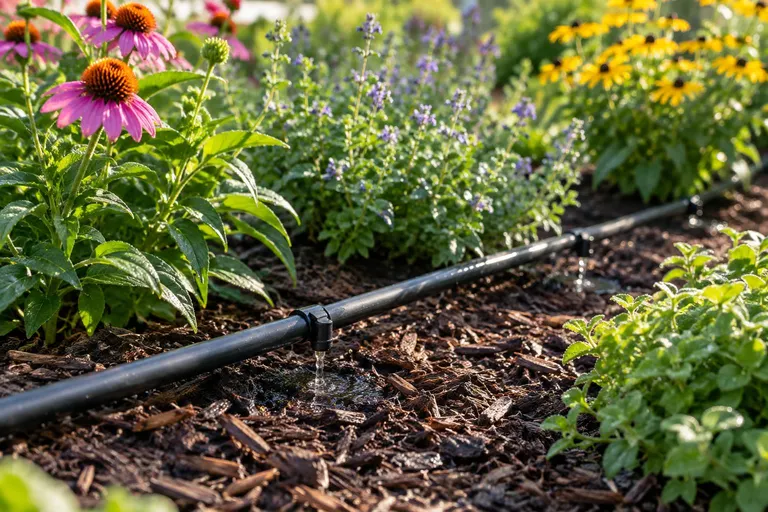
Drip irrigation delivers water slowly to plant roots in beds, saving water and keeping leaves dry and healthy.
- Parts: Line, emitters, filter, regulator
- Zone: Own timer or valve
What it is, and why it matters.
Spray heads waste water on beds through wind and evaporation and wet leaves, which can promote disease. Drip lines and emitters put water right at the roots at a gentle rate, which suits shrubs, flowers and vegetables.
We design a layout for each bed, install line, emitters and a filter and regulator, connect it to your timer or a separate zone and show you how to adjust it. We can retrofit a bed that was on a spray zone, or add drip to a new planting.
Four things done right.
Water at the root
Plants get the water exactly where they need it.
Dry leaves
Less wetting means fewer leaf diseases.
Water savings
Low-flow delivery loses less to wind and evaporation.
Planned for your beds
Emitter spacing matches each plant type.
From first call to drip irrigation for beds.
- 1
Map the beds
We note plants, spacing and water needs.
- 2
Design the layout
Lines and emitters are planned.
- 3
Install
Line, filter and regulator go in.
- 4
Test and teach
We test the zone and show you how to adjust.
Drip Irrigation for Beds in cities across the country.
We do this work for homes and businesses from coast to coast. Find your city to see the grass and climate we plan for.
Drip Irrigation for Beds: common questions
Is drip better than spray for beds?
For most beds, yes. It uses less water and keeps leaves drier. Lawns still do best with spray or rotor heads.
Does drip get clogged?
Emitters can clog, which is why we install filters and check lines each season.
How do I get a quote for drip irrigation for beds?
Fill in the form or call or text 800-224-9245. A few details about the lawn, or a photo, usually give us what we need, and we send a written price.
Ready to talk about drip irrigation for beds?
A few details or a photo of the lawn, and a written price.